Royal Conservatory of Music
SITUATION:
The Royal Conservatory of Music in Toronto, Canada ranks as one of the leading music schools in the western world. In 2002, it embarked on a bold adventure to upgrade and expand its existing facilities. The problem was that half way through its 100 year history, a subway line had been inserted deep beneath the property – a noise source that threatened both the studios and the concert hall.
ASSESSMENT:
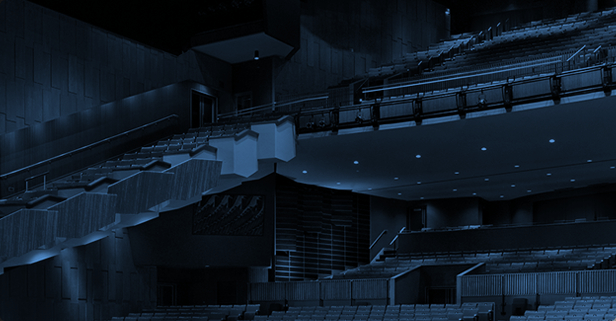
RCM’s primary goal was to provide the students and faculty with new studios and rehearsal space and, laterally, with a world class 1,140 seat concert hall. Aercoustics, working with Sound Space Design, were responsible for noise and vibration control of the building and had to come up with a solution. The goal was to build a concert hall a perfectly quiet “N1″ concert hall. A difficult task to say the least. Noise and vibration measurements were performed on site to provide an objective quantification of the actual problem. And to give the owners a visceral experience of just how serious the problem was, the traditional presentation of numbers and graphs was supplemented with a calibrated audio demonstration.
SOLUTION:
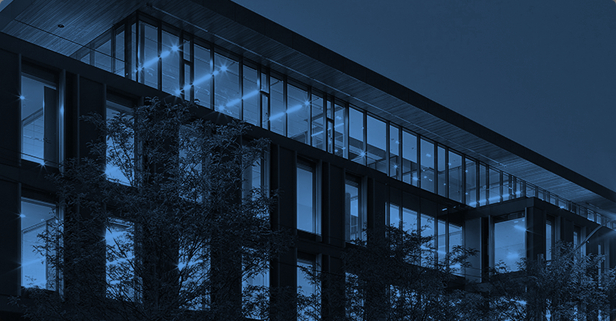
The solution to the subway noise problem was to isolate the building on large rubber pads. What looks like a single building is actually three. At one end the concert hall is bearing on rubber, as is the large rehearsal room at the other end. In between the less sensitive parts of the building are bearing on grade. Many parts of the building also had to isolated from more than just the subway. They had to be isolated from each other and the surrounding noise of the city. The large rehearsal room features a 1 metre deep window that, at once, provides natural daylight and a formidable barrier to the noise on the street below.
RESULTS:
RCM’s teaching facilities and concert space opened in 2008 and 2009 respectively. The rooms are quiet without a trace of subway noise to be heard. In addition, just prior to the 2009 opening, Aercoustics applied their vibration control expertise to one of the lobby staircases that was lacking the appropriate stability. A Tuned Mass Damper (TMD) was designed to counteract motion at a resonant frequency just below that of the stair.