
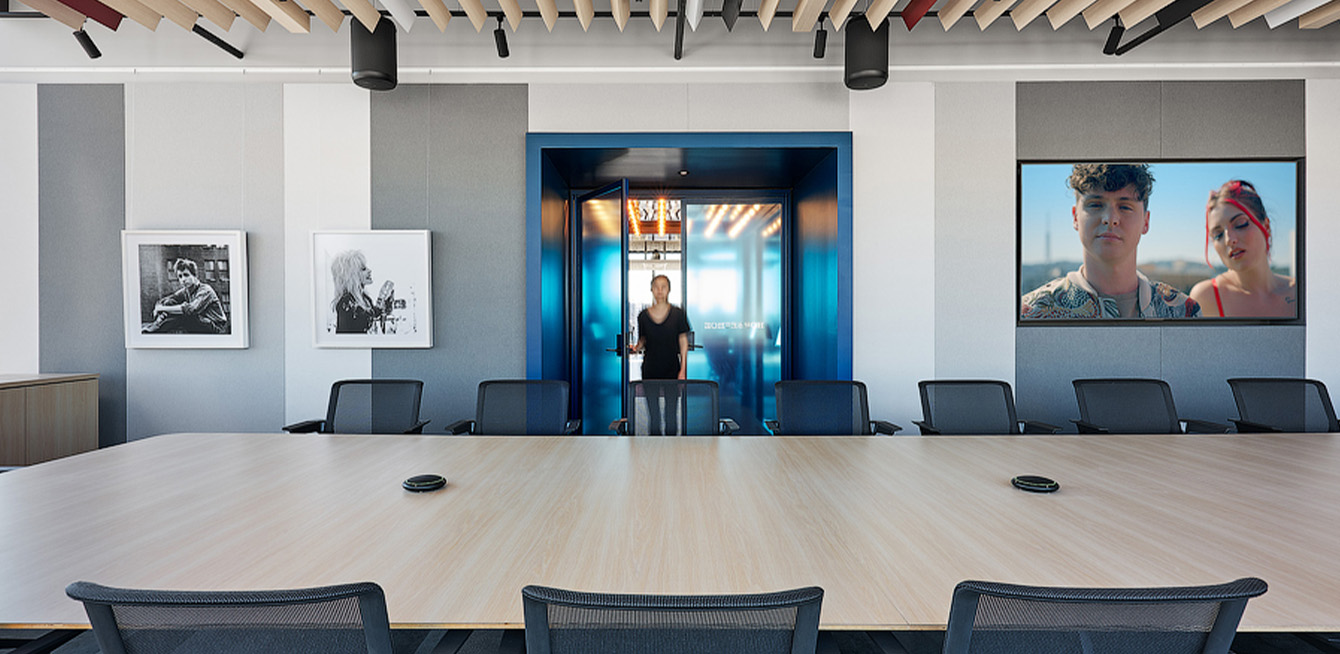
Office Acoustics in the Return-to-Office Era
The modern office has changed more in the last five years than in the previous twenty-five. Teams use space differently. Meetings spill between virtual and in-person formats, density rises and falls week-to-week, and office culture and norms include a new generation of the workforce. These shifts have created new acoustic pressures that weren’t always part of workplace planning. And now the rubber has hit the road with the great Return to Office. 2026 is revealing the new reality of in-office work, and employee satisfaction is dropping. This is a complex issue with many contributing factors, but poor acoustic performance doesn’t have to be one of them.
As RTO mandated occupancy increases, the acoustic limitations of an office become more noticeable. Office noise affects concentration, privacy, employee satisfaction, and overall comfort, and constant exposure to noise can increase fatigue and stress, and reduce productivity. Companies are investing heavily in return to office. Investment in Canadian commercial real estate is expected to hit $56 billion in 2026, the third highest total on record. This has meant lower vacancies for premium office space. And, with fewer base building starts projected, this is expected to trickle down to lower vacancies in Class B/C buildings.
The Base Building Condition
AAA Buildings: High-End Spaces, Real Acoustic Challenges
Premium towers are popular, having the lowest vacancies, but their acoustic challenges are underestimated. Landlords place limits on how the fit-out interfaces with the base building systems, like mechanical systems, plenums, and window mullions. These features can create space planning issues and flanking paths, restricting acoustic performance. When modifications are limited or might hold up the project schedule, requirements need to be negotiated to find a common ground on design choices, and to deliver the right acoustic performance for the job.
Additionally, tenants want to leverage all the space they can in these premium leases. Tenants choosing high density offices often lose enclosed collaboration areas and introduce large open work zones. This shift reduces acoustic separation, weakens speech privacy, and makes it harder to find areas for focused or confidential tasks when meeting rooms are at a premium.
While premium base buildings are designed with the modern workforce in mind, they present their own challenges with strict terms and a small footprint. A thoughtful fit-out can solve these issues, but that is helped by early involvement from the acoustic consultant. The early stages offer more room to negotiate and adjust fundamental design decisions..
Class B and C Buildings: Flexibility With More Variables
When organizations move into older, lower-tier buildings, the conditions they inherit are shaped by choices made long before hybrid work existed. Legacy mechanical systems and construction now have to support functions they were never designed for, which complicates background noise controls and limits options for sound isolation and room acoustics.
That said, lower-tier buildings usually provide more room to reconfigure layouts and negotiate construction changes. In these spaces, careful planning can produce strong acoustic results, but only when the design team understands the issues these buildings typically present. An experienced acoustic consultant can give an honest assessment of existing conditions and identify solutions that take full advantage of the flexibility and extra square footage on the table.
Designing With Intent
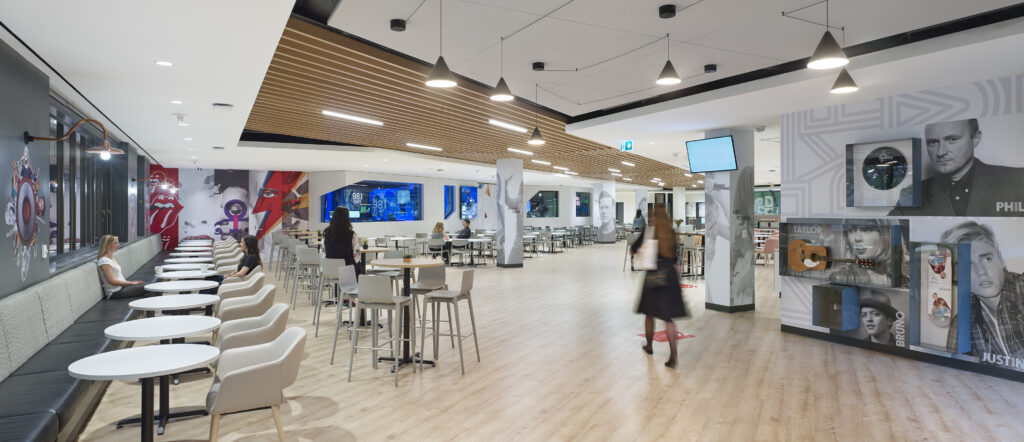
Many organizations understand the challenges of the new workplace and are rethinking how their offices function. The list of demands has grown. Bespoke collaborative spaces, private rooms, flexible spaces, and quiet zones all require different acoustic conditions. So do the newer demands: whisper-mode AI dictation tools, always-on voice-to-text interfaces, and ambient AI assistants are becoming standard at work, adding a constant low-level layer of speech. In a market where offices are being reshaped to support new patterns of work, acoustics matter because the right approach can optimize sound quality without sacrificing how people use the space.
What Now?
If staff return to offices that feel noisy or distracting, this works against the very mandate companies are spending billions to support. The link between RTO and rising turnover is real, and acoustic discomfort is part of that story, even when it doesn’t get named as such.
Companies that get this wrong end up paying for space that drives people away. Those getting it right treat the office as a product that has to earn people’s commute, compete for their attention, and support the kind of culture that can’t be mandated from the top down. That means flexible spaces where focused work and collaboration don’t undermine each other. Acoustic performance belongs in that conversation from the start.
Aercoustics works closely with design teams to understand client needs and shape office design with acoustic solutions tailored to different activities, evaluate the limitations of the base building, and identify solutions that balance collaboration with quiet work while balancing performance with cost. We are direct about where compromise is possible and where it risks unacceptable outcomes. Our experience with office fit-outs across many sectors, legal, financial, technology, government, and others, helps us anticipate challenges early and guide teams through them.