
Why Battery Energy Storage Systems (BESS) Need More Than a Noise Assessment
Battery Energy Storage Systems (BESS) are moving from niche infrastructure to a common feature of Canada’s electricity landscape. Utilities need flexibility, renewable generation continues to expand, and developers are pursuing procurement opportunities across multiple provinces.
A BESS noise assessment is often treated as a permitting deliverable, a report produced to demonstrate compliance with local noise limits before an application proceeds. That framing undersells what the analysis can do. Noise is increasingly part of project planning, not because battery facilities are unusually loud, but because acoustic constraints become much harder to address once key decisions have been made, and the development process is fast-moving with lots of interdependent parts.
This article looks at how acoustic considerations fit into the broader development process, and why many battery storage projects benefit from treating noise as a planning consideration rather than a permitting exercise.
What Are the Main Noise Sources at a Battery Energy Storage Site?
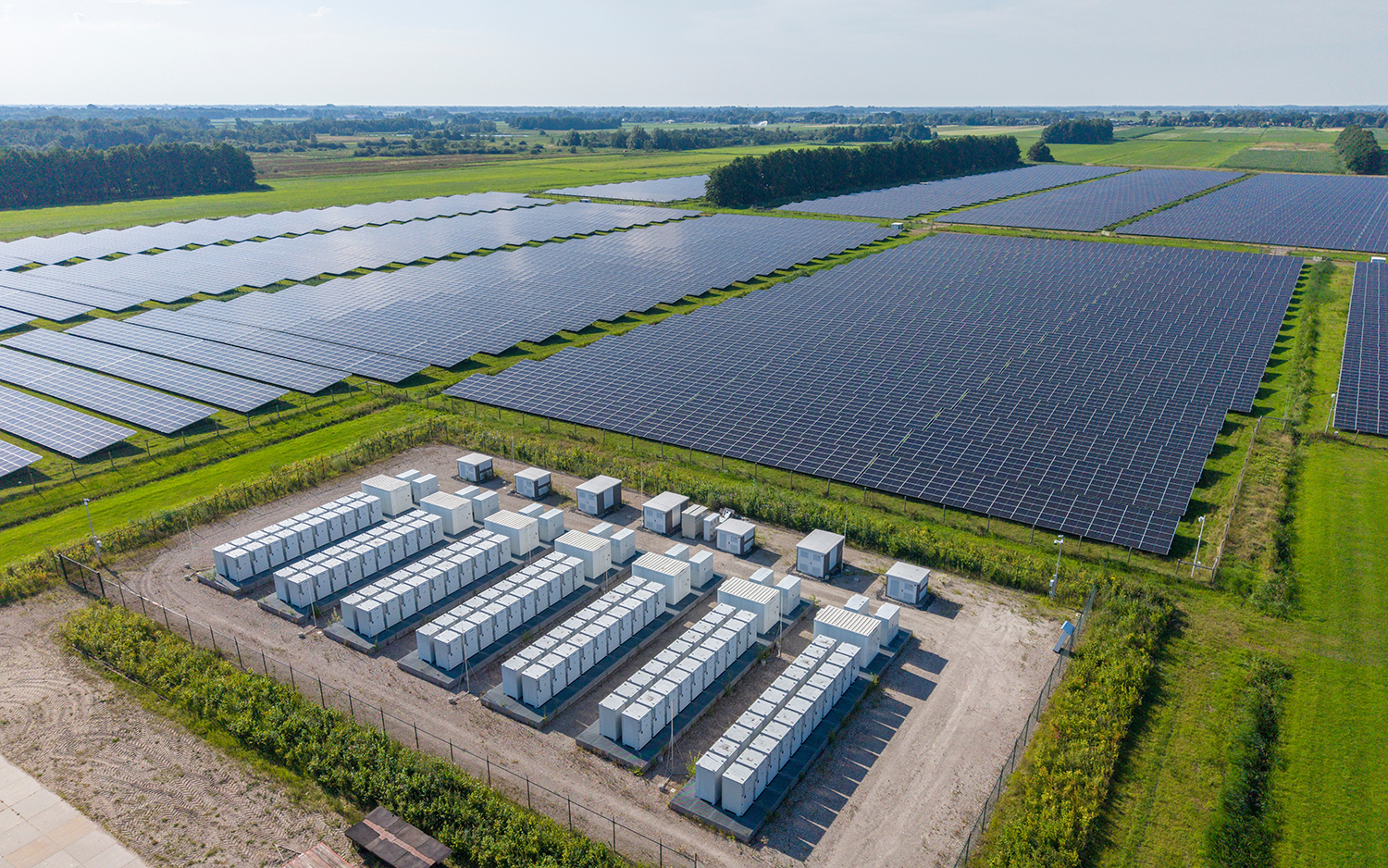
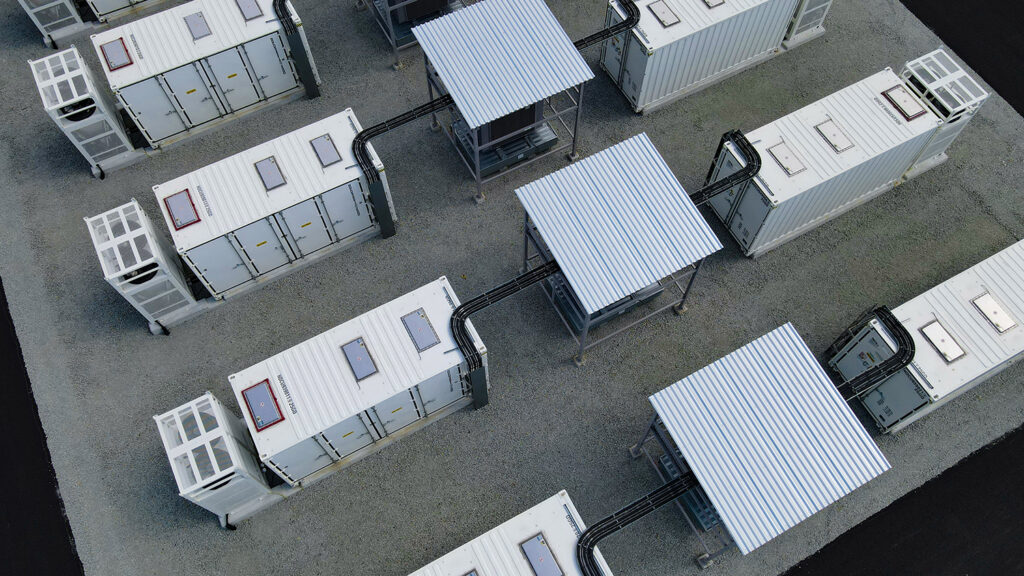
The primary noise sources at a BESS are the cooling systems, the inverters, and the transformers. Batteries themselves are silent. Almost everything audible at the property line comes from the components that keep the batteries cool and move power to and from the grid.
Cooling equipment is often the largest contributor. Lithium-ion cells perform best within a narrow temperature range, so every battery enclosure relies on active cooling, either HVAC units mounted on the enclosure or liquid cooling with external chillers. This equipment runs harder as outdoor temperatures rise and as the batteries charge and discharge. Cooling noise therefore tends to peak in hot weather, when residents are more likely to be outdoors or sleeping with windows open.
Inverter units convert direct current to alternating current for the grid. Their switching electronics produce a high-pitched electrical buzz, and transformers add a steady hum. Across a large site those sources combine, so sound levels at the property line reflect the whole installation rather than any single unit.
Fans, compressors, inverters and transformers all tend to produce tonal noise, and a steady tone is more noticeable than broadband sound at the same level. Many jurisdictions account for this with a tonal penalty that raises the assessed level. A BESS can be acoustically compliant and still produce the hum residents notice at night.
When Do Acoustic Constraints Become Schedule Risks?
Acoustic constraints become schedule risks at the point where the initial design can no longer absorb them. Early review shows how equipment selection, layout, setbacks, and noise control measures interact before those decisions harden.
Identifying a challenging condition during preliminary design leaves options available, from repositioning equipment to reduce noise at sensitive receptors to evaluating alternative BESS equipment. If the issue surfaces after procurement, those options narrow. Relocating equipment is no longer realistic, and specifying quieter units means reopening supply agreements. What options remain are usually limited to barriers, enclosures, or in the worst case, operational restrictions.
How Do You Choose Between Compliant Designs?
Meeting a noise limit confirms compliance. It does not confirm the design is the best available option. Different solutions may achieve the same acoustic outcome with very different implications for cost, operations, maintenance, and future expansion.
| Noise control measure | Typical trade-off |
|---|---|
| Acoustic barrier or sound wall | Simplest solution to reduce noise levels, but consumes site area and barriers close to equipment can restrict airflow and maintenance access |
| Low-noise equipment selection | Addresses noise at the source, but narrows the supplier pool and affects procurement timelines |
| Acoustic enclosures | Effective when significant noise reductions are needed, but adds high cost, additional cooling requirements, and ongoing maintenance |
| Increased setback distance | Simple and effective, but reduces usable site capacity and is not usually feasible unless identified early in the development process |
| Operational restrictions | Low capital cost, highly effective, but often comes with commercial impacts that must be accounted for early in the process |
A solution that works acoustically may create problems elsewhere. New barriers can affect site layouts, acoustic enclosures can introduce new cooling requirements, and low noise equipment requires careful consideration in the supplier contract to ensure the acoustic performance will be met.
How Do Requirements Differ Across Canadian Jurisdictions
Requirements vary substantially by province, and assumptions do not transfer between them. Regulatory agencies enforce noise limits for facilities near residential areas, and permitting pathways, surrounding land uses, and community expectations all influence how acoustic risk is assessed.
For developers working across multiple markets, the applicable criteria, receptor definitions and assessment methods change from one project to the next, and a configuration that got your permit in one province may not pass muster in another. At Aercoustics, an acoustic, noise and vibration engineering firm with offices in Mississauga and Vancouver, we work on utility-scale battery storage projects in several Canadian jurisdictions, so each assessment starts from the requirements of the province where the project sits.
What Changes When a BESS Is Co-located With Solar or Wind?
Co-location changes the assessment from an equipment question to a site question. Acoustic assessments need to consider the site as a whole rather than evaluating BESS equipment in isolation.
Adding storage to an existing site changes the acoustic environment. The question is not only whether the battery complies on its own, but how and when it combines with existing sound sources. On a solar site, for example, inverters already contribute tonal content, so a BESS is rarely assessed against a quiet baseline. The last thing you want is for your BESS expansion introducing curtailment requirements to your generation assets.
What This Means for Your Project
Acoustic performance is one part of a picture shaped by technical requirements, project economics, regulatory obligations, project team coordination, and community expectations, and it influences many of the decisions that follow.
Addressing noise early clarifies a project’s constraints while there is still room to plan around them. For developers balancing timelines, budgets and project certainty, that clarity turns noise from a permitting hurdle into a planning tool.
Frequently Asked Questions
What will a BESS noise assessment show you?
Predicted noise levels at the nearest sensitive receptors, how those compare against applicable local noise limits, and the options your site has available to close any gaps. Done early, it also shows how much acoustic headroom a given layout provides, which can give you flexibility to manage other development constraints without needing to constantly reassess the noise levels.
What equipment causes the most noise at a battery energy storage site?
Cooling systems are usually dominant, because every battery enclosure needs continuous thermal management and HVAC systems run whenever the site is operating. Inverters and transformers contribute tonal noise, a buzz or constant hum, which often drives complaints even at modest sound levels.
Are battery storage facilities noisy?
Not by industrial standards. However, the continuous operation of BESS units creates persistent noise, including at night, and sites are frequently located where background noise is low and a steady hum carries. Where it disrupts nearby residents, the cause is persistence and tone rather than volume.
Is BESS only used for grid-scale projects?
No. Large electricity users are adopting battery storage as well. Microsoft has pledged to eliminate diesel backup at its data centres by 2030 and has already replaced generators with a 16 MWh battery system at one site in Sweden. Behind-the-meter systems like these use the same cooling, inverter and transformer equipment as grid-scale projects, and they raise the same acoustic questions.
